
Welcome To Osage County
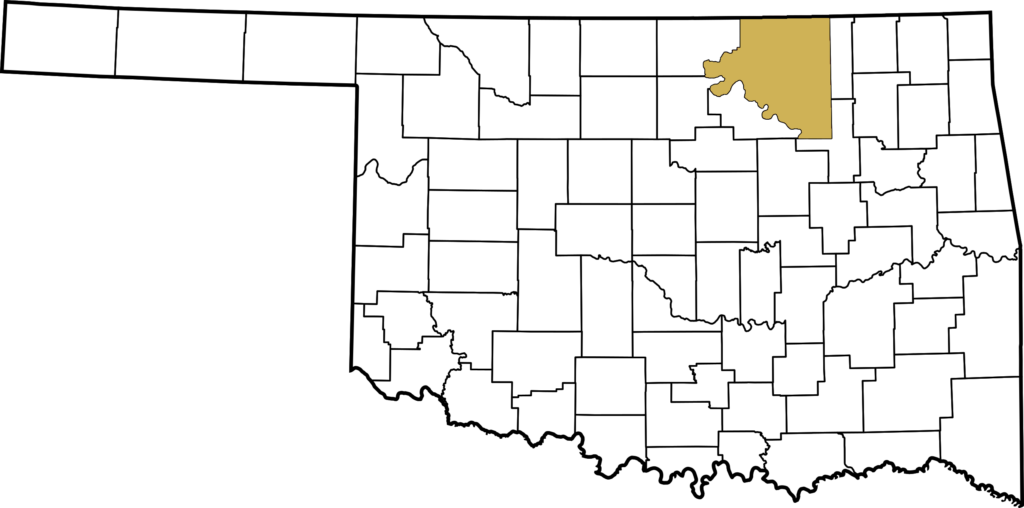
Oklahoma’s Largest County
At the Osage County Sheriff’s Office, our mission is to provide a solid foundation on which the residents of Osage County can thrive. We are committed to building public trust and fostering safe, secure communities through professional, high-quality professional law enforcement.
Osage County holds a unique place in Oklahoma’s history and geography. As the state’s largest county by area, it was established in 1907 when Oklahoma gained statehood. The county’s name and heritage are deeply tied to the federally recognized Osage Nation, whose reservation boundaries are coextensive with the county itself. This land became the Osage Nation Reservation in the 19th century following the relocation of the Osage people from Kansas.
The county seat, Pawhuska, is one of the first three towns founded in the county and remains a hub of history and culture. As of the 2020 Census, Osage County had a population of 45,818 residents.
According to the U.S. Census Bureau, the county spans an impressive 2,304 square miles (5,970 km²), with 2,246 square miles (5,820 km²) of land and 58 square miles (150 km²) of water, accounting for 2.5% of its total area. Much of the landscape is part of the Osage Plains, characterized by open prairie, while the eastern portion features the rolling Osage Hills—an extension of Kansas’ Flint Hills. Nature enthusiasts can also explore the renowned Tallgrass Prairie Preserve, located just north of Pawhuska, where remnants of the once-vast tallgrass ecosystem are carefully preserved.
WHAT’S HAPPENING LOCALLY
𝐅𝐎𝐑 𝐈𝐌𝐌𝐄𝐃𝐈𝐀𝐓𝐄 𝐑𝐄𝐋𝐄𝐀𝐒𝐄
𝐅𝐞𝐛𝐫𝐮𝐚𝐫𝐲 𝟐𝟕, 𝟐𝟎𝟐𝟔
𝐒𝐤𝐢𝐚𝐭𝐨𝐨𝐤 𝐌𝐚𝐧 𝐀𝐫𝐫𝐞𝐬𝐭𝐞𝐝 𝐨𝐧 𝐌𝐮𝐥𝐭𝐢𝐩𝐥𝐞 𝐅𝐞𝐥𝐨𝐧𝐲 𝐂𝐡𝐚𝐫𝐠𝐞𝐬 𝐑𝐞𝐥𝐚𝐭𝐞𝐝 𝐭𝐨 𝐂𝐡𝐢𝐥𝐝 𝐒𝐞𝐱𝐮𝐚𝐥 𝐀𝐛𝐮𝐬𝐞 𝐌𝐚𝐭𝐞𝐫𝐢𝐚𝐥
OSAGE COUNTY, OK — In the early morning hours of February 27, 2026, the Osage County Sheriff’s Office executed a search warrant and arrest warrant at a residence west of Skiatook in Osage County.
As a result of the investigation, Logan Patrick Roberts, 19, was arrested on the following felony charges:
Count 1: Child Sexual Abuse Material – Buying, Possessing, or Procuring
Count 2: Distribution of Obscene Material or Child Sexual Abuse Material
Count 3: Violation of the Oklahoma Computer Crimes Act
In January 2026, the Osage County Sheriff’s Office received an Internet Crimes Against Children (ICAC) tip from the Tulsa County Sheriff’s Office identifying Roberts as a subject possibly involved in the possession and/or distribution of child sexual abuse material.
Following weeks of extensive investigation, probable cause was established, resulting in both a search warrant and arrest warrant. On February 27, 2026, deputies executed the warrants at the suspect’s residence.
Roberts was taken into custody without incident and transported to the Osage County Jail. He is currently being held on a $150,000 bond. The investigation is ongoing to identify possible additional victims or crimes associated with this complex investigation.
The Osage County Sheriff’s Office would like to thank the Tulsa County Sheriff’s Office for their assistance and cooperation during this investigation.
This is an arrest, not a conviction.
109 CommentsComment on Facebook

UPDATE 2/26/2026
This subject has been apprehended!!
🚨 BOLO – WALKAWAY ALERT 🚨
🚨 DICK CONNER CORRECTIONAL FACILITY – HOMINY, OK 🚨
The Osage County Sheriff’s Office is asking for the public’s assistance in locating an inmate who has walked away from the Dick Conner Correctional Facility in Hominy, Oklahoma.
KYLE JASON VACIN
DOC #713738
• Gender: Male
• Race: White
• Height: 5’9”
• Weight: 161 lbs.
• Hair: Brown
• Eyes: Blue
• Date of Birth: 01/12/1993
Identifying Marks:
• Tattoo – Left Arm: “REBEL”
• Tattoo – Right Arm: Cross
• Tattoo – Right Chest: Name, arrow, dates
He is currently serving a 7-year sentence for Eluding a Police Officer and Receiving/Possession/Concealing Stolen Vehicle.
At this time, his direction of travel and clothing description are unknown.
⚠️ If you see this individual, do NOT approach.
Please contact the Osage County Sheriff’s Office at 918-287-3131 or call 911 immediately.
Please share to help us spread the word.
8 CommentsComment on Facebook

Get to Know Investigator Anthony Barrett
What’s it really like to serve as an investigator with the Osage County Sheriff’s Office?
Let’s find out.
Meet the man. The myth. The legend.
#OsageCountySheriff #BehindTheBadge #InvestigatorLife #lawenforcement #PublicService #serveandprotect #Oklahoma
13 CommentsComment on Facebook

Motorcycle Safety Matters — Share the Road!
Over 6,300 motorcyclists were killed on U.S. roads in 2023 — making up 15% of all traffic fatalities. Riders are nearly 28 times more likely to die in a crash per mile traveled than passenger vehicle occupants.
𝙒𝙝𝙚𝙩𝙝𝙚𝙧 𝙮𝙤𝙪 𝙧𝙞𝙙𝙚 𝙤𝙧 𝙙𝙧𝙞𝙫𝙚, 𝙨𝙖𝙛𝙚𝙩𝙮 𝙞𝙨 𝙨𝙝𝙖𝙧𝙚𝙙.
𝐑𝐞𝐦𝐞𝐦𝐛𝐞𝐫:
⚠️Wear a DOT-approved helmet
⚠️Ride sober
⚠️Obey speed limits
⚠️Stay visible
⚠️Look twice and give motorcycles space
Motorcyclists’ Safety is Everyone’s Safety.
0 CommentsComment on Facebook

“𝗙𝗿𝗼𝗺 𝗗𝗼𝗴 𝗖𝗮𝗹𝗹𝘀 𝘁𝗼 𝗛𝗼𝗺𝗶𝗰𝗶𝗱𝗲𝘀: 𝗧𝗵𝗲 𝗤𝘂𝗶𝗲𝘁 𝗟𝗲𝗴𝗮𝗰𝘆 𝗼𝗳 𝗗𝗲𝗽𝘂𝘁𝘆 𝗗𝘄𝗶𝗴𝗵𝘁 𝗩. 𝗕𝗮𝗿𝗻𝗮𝗿𝗱”
Today, on his birthday we remember and honor the life and legacy of Deputy Dwight V. Barnard
𝗙𝗲𝗯𝗿𝘂𝗮𝗿𝘆 𝟭𝟴, 𝟭𝟵𝟰𝟯 – 𝗦𝗲𝗽𝘁𝗲𝗺𝗯𝗲𝗿 𝟮, 𝟮𝟬𝟭𝟭
Deputy Barnard devoted more than forty years of his life to protecting and serving the people of Osage County—quietly, faithfully, and without fanfare. He was the kind of lawman whose name might not always make headlines, but whose presence was felt across generations and miles of rural road.
He began his career with the Osage County Sheriff’s Office on November 1, 1971, serving in nearly every capacity from Deputy to Investigator. Over the decades, he worked under five sheriffs—George Wayman, Henry Bloomfield, Russell Cottle, Wes Penland, and Ty Koch—providing steady leadership and invaluable institutional knowledge during a period of constant change in law enforcement. From 1986 to 1991, he also served with the Fairfax Police Department, further extending his commitment to public service.
For nearly two decades, Deputy Barnard was a constant presence across western Osage County, patrolling a vast territory stretching from Foraker Road to the McCord area of Ponca City. In that wide-open country, he handled everything law enforcement could bring. As he once put it, the job ranged from “dog calls to homicides.” No matter the call, no matter the hour, he answered it.
Barnard worked every shift imaginable—days, nights, weekends, and countless long hours that often went unnoticed. Even after retiring from full-time service in 2005, his dedication never faded. He returned as a part-time commissioned deputy and continued serving the people of Osage County until his passing in 2011.
He valued being outdoors, working directly with citizens, and serving the same country he had grown up in. What troubled him most was seeing people victimized—something he worked tirelessly to prevent throughout his career. His calm demeanor, deep local knowledge, and steady professionalism made him a trusted figure on the back roads and ranches he patrolled.
Beyond the badge, Dwight Barnard was a devoted family man, a lifelong ranch-country resident, and someone deeply rooted in Osage County. Even a brief brush with Hollywood—providing security during the filming of Twister—never tempted him away from the work that mattered most to him.
Dwight was also an avid amateur photographer with a sharp eye for detail. He was frequently assigned as the designated crime scene photographer and operated a darkroom in the old Osage County Jail, where he processed and developed 35mm film. In 1982, his attention to detail led to the recovery of a suspect’s latent palm print from the trunk of a vehicle—a critical piece of evidence that helped solve a high profile homicide case.
Dwight was my first Sergeant when I was assigned as a field deputy in 1998, working the western area of Osage County. I was honored to work alongside him at the beginning of my career—and even more honored to call him my friend.
A proud U.S. Army veteran of the Vietnam Era, Deputy Barnard’s life was defined by service—to his country, his community, and his family. He was laid to rest with full honors at Burbank Cemetery on September 23, 2011.
His legacy lives on across the back roads, ranches, and communities of Osage County—and in every deputy who understands that quiet dedication and local knowledge remain the foundation of rural law enforcement.
— Sheriff Bart Perrier
76 CommentsComment on Facebook


DOMESTIC ABUSE & BURGLARY
Arrested: Michael Duwane Janssen
On February 14, 2026, at 17:46 hours, the Osage County Sheriff’s Office received a 911 call reporting a domestic disturbance. Deputies responded and subsequently arrested the above individual on charges of Domestic Abuse in the Presence of a Minor and Burglary in the First Degree.
Domestic violence situations are among the most serious and dangerous calls our deputies respond to, especially when children are present. Our priority is, and always will be, the safety of victims and ensuring offenders are held accountable for their actions.
We want to remind our community that help is available. If you or someone you know is experiencing domestic abuse, please reach out. You are not alone.
This is an arrest not a conviction.
#OsageCounty #ProtectAndServe #CommunityFirst
13 CommentsComment on Facebook